
FORMER NHS worker JANE BARTLETT went to East Tisted with her sister to revisit countryside she played in as a child; while walking they passed farms reminding them of growing up on a pig farm at Hawkley and nights spent ratting, while clusters of sloe berries brought Christmas to mind.To enjoy this walk, from the A32 turn right opposite the entrance to Rotherfield House into Station Road and follow it through the village until you come to a large lay by on the left and park here to start the walk.
I and my sister parked at the start of this circular ramble setting off along a path leading up the hill – in the hedgerows there were sloes, blackberries and elderberries.
At the end of the path we turned left opposite Shotters Farm across newly harvested fields with stubble in and breathtaking views of acres of fields to the right and trees on the left.
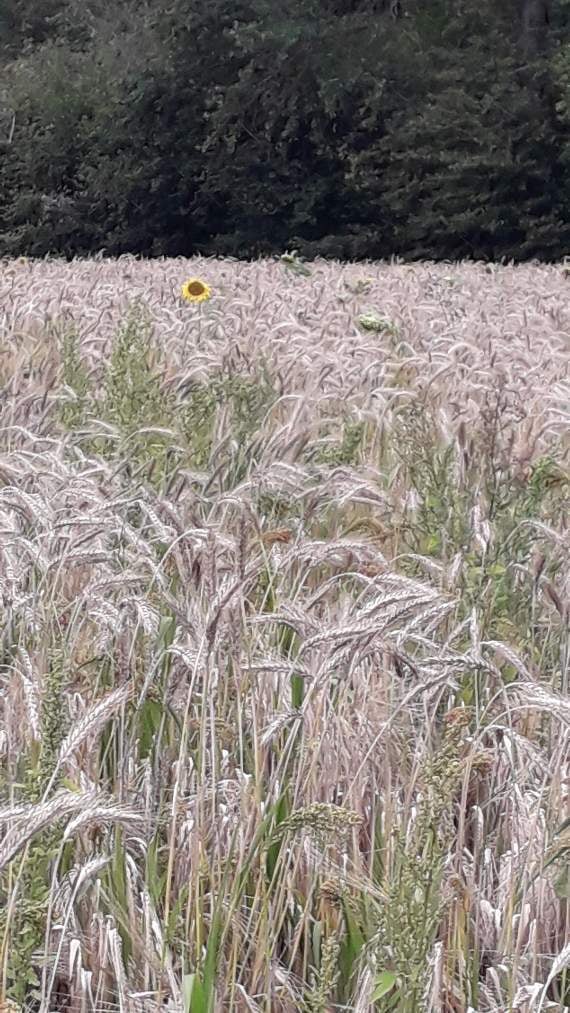
We noticed a small patch of wheat growing with sunflowers amongst it; my sister thought it had been left as ‘cover’ for the pheasants.




Walking across the next field, in-line with the electricity pylon, we went through a beautiful archway of oak, beech and hazel trees into a small wood; it is a carpet of bluebells in the spring and well worth a visit.
From the next field we could see the majestic Rotherfield Park House in the distance, and Inadown Riding Stables, where our daughters spent many happy weekends riding – and mucking out the ponies!
Climbing over a style, and stopping to catch our breath as we were chatting so much, we were faced by a fallen down ivy covered tree covered blocking the path, but a well worn trail took us around it and into woods.
The climb down through the woods was steep, on either side some of the fern was beginning to turn autumnal bronze and yellow,
Coming to an old wooden bench we went left – below us was the old railway line bed, we used to play there when we were at East Tisted Primary School.
The old railway line was the Meon Valley Line, that ran between Alton and Fareham with a stop at East Tisted.
It opened in 1903 and the last train to travel it was pulled by two locomotives on February 6, 1955.
It was closed by the government along with hundreds of other now sadly missed lines across the country.
Walking a short distance along the top of the footpath we came to steps leading down onto the railway bed, on it we turned left and enjoyed the flat man made path.
On the ground beneath a lovely old Horse Chestnut Tree there were familiar green spiky cases with shiny chestnut red conkers inside.
When we played here as children, before health and safety was a thing, and we, and then our children, used to spend hours collecting conkers, skewering them, threading knotted string through the holes, and indulging in knuckle skinning conker fights – and woe betide anyone who was discovered swinging a conker baked in the oven to make it harder! Following the path down a steep track we came out at the side of Bridle Close.
Turning right we admired the old water pump at the village pond before turning left towards the old railway station.
It is now a house and the planting that has been done there is lovely.
Climbing a small hill towards the old railway bridge, there was a much clearer view of Rotherfield Park House.
It was built in the 1850’s, though the manor of Rotherfield dates back to the 12th century.
If you look closely there is what looks like a castle on one side, known as Gardener’s Tower. The house has appeared in films and TV dramas including Agatha Christie’s’ Poirot; After the Funeral.
Turning right after the bridge there was yet more large clusters of sloe berries.
Arriving at a gateway, we crossed a large field, climbed over a stile, crossed a lane, clambered over another stile, and walked through pastures with grazing cows.
Turing diagonally left there was another stile, and then a copse.
And here the path was quite steep, at the end of it there was another stile into a beautiful hidden valley with more grazing cows.
The grass was looking lush and green and the trees were stunning.
Walking down the valley, we turned left onto a path that looked like a narrow tennis court with the base line running through it – it was an ingenious path for the cows to walk along on their way to milking.
Passing a hay barn we came to a five-bar gate opening onto the road, on the other side were our cars.
SEEING the farms on our walk took me back to my childhood growing up on our family pig farm In Hawkley; it was a joy and left me with a great love of the countryside.
Helping Dad was a great way to learn about animals and everything else that goes with producing farm food.
In the 1960’s long before seat belts were compulsory we would often have a pig or two in the car with us on the school run!
However one thing that wasn’t enjoyable was ratting – in fact 50 years later I still have an irrational fear of rats!
They are a problem on any farm, and back then keeping the numbers down was a real challenge.
Sleeping was always a problem for me as a child, and as I was often wide awake in the middle of the night, Dad would take me, along with our dog, up to the pig pens for a rat hunt.
Walking up to there in the dark with our torches was the best bit as once we climbed onto the pen roofs and shone the lights down into the enclosures it was a nightmare come true as there would be rats everywhere!
But the dog made short work of these pesky rodents and for him was an enjoyable night’s work.
I think Dad thought that going on these night time excursions would cure me of my rat phobia!
But it probably made it worse, even reading Charlotte’s Web, a favourite book of my children, I had to skip the passages featuring Templeton the rat.
AND the large clusters of sloe berries we saw on our walk prompted me it was time to start making sloe gin to enjoy at Christmas – or before if tempted !
Sloes are the fruit of the blackthorn, that in Spring are covered with white blossom.
Blackthorn packed with sharp thorns is often grown in hedgerows to help keep livestock in check.
Making delicious sloe gin is fairly simple – or when reduced it can be used to drizzle on cakes.
Folklore has it that sloes should only be foraged after the first frost, which was used as a signpost in time.
However this year there’s no need to wait this long as they are ripe now and ready for picking.
But if they are like rock when squeezed they are not ripe; they should be soft almost like a small ripe plum.
So to make sloe gin, weight out 500 grammes of the fruit, and remove any stems.
Then pop the berries in the freezer for two to three days.
Freezing ruptures the sloes evenly, allowing the flavour to leak out when they are sitting in the gin.
Put the frozen sloes into an airtight jar that will easily hold 1.5 litres, put in 250 grammes of sugar, and add 70 cl of gin.
Store your jar in a dark place, and for the first week or so bring it out and turn it over a few times.
Once all the sugar has dissolved leave it in the dark for at least three months.
But don’t be tempted to try it before then, as it won’t have fermented, and you may be sorely disappointed!
Comments
This article has no comments yet. Be the first to leave a comment.