
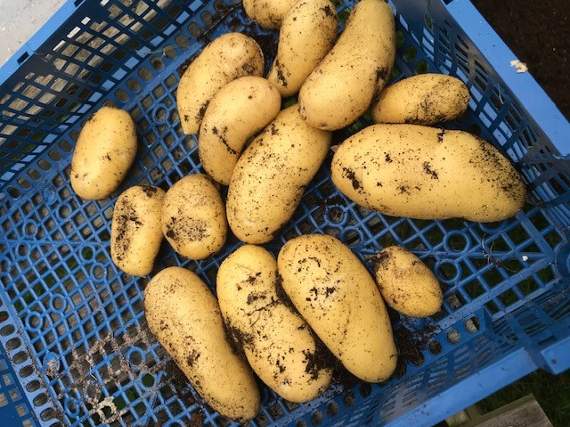
Potatoes are a great way of getting into growing your own vegetables.
But as they are the most readily available vegetable out there, is it worth growing your own?
My answer is absolutely yes. The taste of a freshly-dug new potato is a far cry from the ones you buy in the supermarkets and the beauty of growing your own is you don’t even need a garden – you can grow them in just about anything and anywhere.
One of the main advantages is you can grow what you want or like depending on your culinary preference.



There are so many varieties to choose from but as a rule they can be split into two main categories, earlies and maincrop.
Both are planted at the same time, but earlies – as the name suggests – are ready for harvest much earlier than maincrop, which are usually larger and are better for storing.
Earlies are usually ready to harvest when they start to flower, at around ten to 12 weeks, and maincrop can be left until the stems and leaves have died back.
Growing could not be easier, and they will do well as long as you have a fairly fertile, well-drained and sunny site.
Make sure you buy seed potatoes and start them chitting, which is when you give them a head start.
Four to six weeks before planting, put them eyes up in an egg box in a cool but frost-free light room.
Each potato will start to develop shoots. When planting, it is traditional to dig a trench about six to eight inches deep and place the seed potatoes 12 inches apart.
Cover them gently with soil, and as the shoots start to poke through the soil start earthing up, which is the process of drawing up the soil over them to make a ridge.
This helps stop weeds growing and also keeps the light off the tubers, as they will turn green – and poisonous – if exposed to too much light.
Keep them well watered, especially when the young plants are emerging, and get ready as described above to harvest.
There is no better feeling than digging up potatoes.
My kids love it – it’s like discovering gold in the ground.
If you are limited with space, don’t worry. You can use a large pot – fill it up to a third with compost, put in one to three seed potatoes and cover.
When the shoots start appearing, cover and keep covering until your pot is full. When they are ready you will be amazed how many spuds you will get.
For more advice and an amazing choice of seed potatoes, join me along with Pennard Plants on January 16 at the Herne Farm Community Centre between 2pm and 5pm for the third annual Petersfield Potato Sale.
The guys from Pennard are real experts and will be able to guide you through the 60 varieties they will bring with them, along with hundreds of heritage seeds, onion sets, fruit canes and many other gardening sundries.
Steve Amos