
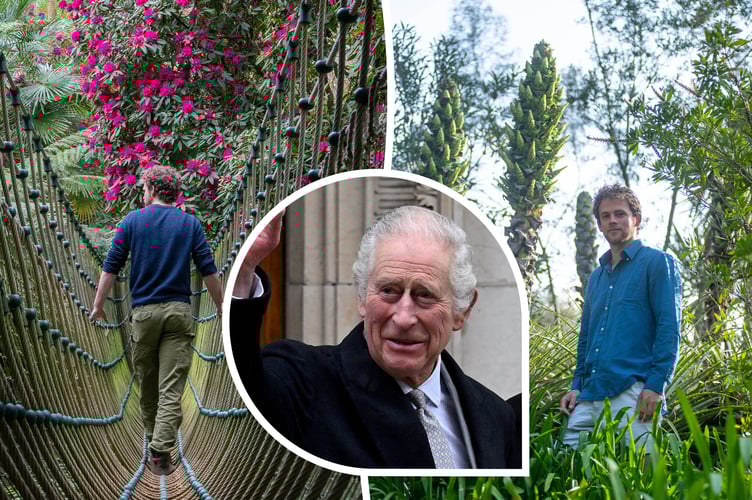
A former worker at RHS Wisley who went on to work for King Charles has revealed the monarch’s exact tastes in vegetable growing.
David Pearce, who worked for the King in his kitchen garden, said Charles "banned" squash and courgettes – and insisted carrots were grown to an exact size.
He revealed the famously green-fingered royal took a keen interest in the fruit and vegetables that landed on his plate – but a couple were off limits.
David managed mixed beds running down the middle of the kitchen garden.



And although the King demands his produce be of a high standard, he is not a fan of all fruit and vegetables.
David, now the youngest curator of Abbotsbury Subtropical Gardens, said: “I spent about a year working for His Royal Highness in the kitchen garden, growing fruit and vegetables and wonderful things that went into his dinners and lunches.
"We were growing mostly things he requested himself – a whole bed of salad and two whole beds of asparagus, he was very keen on that.
“Things like cauliflower, and he particularly liked his crudité carrots – we would have to grow them to a particular size, of your little finger.
“He particularly liked spinach. We grew onions, leeks and Florence fennel. It was mostly working with him and his individual preferences.
“But squash was off the cards, and absolutely no courgettes.”
David had a "feral" youth growing up in Hampshire.
He said: “I was running around having a wonderful time. Everything was wild and wonderful and exotic.
“Weighing up my career options, I loved the idea of being outside, growing things – the science and the art of it.
“And on a bit of a whim, I applied for an apprenticeship at Ventnor Botanic Garden on the Isle of Wight.”
He then worked in the gardens at Wisley – the Royal Horticultural Society's flagship garden in Surrey, which runs one of the oldest horticultural training programmes in the world.
David’s days were spent in the garden, surrounded by 300 acres of impeccably managed planting; his evenings tapping away at coursework on a laptop.
After graduating during the pandemic, he found a job at Highgrove, the private residence of King Charles III and Queen Camilla, near Tetbury in Gloucestershire.
Tucked into the woodland, the one-acre walled garden is geometrically arranged, dripping with blossom in spring, and run along emphatically organic principles.
David describes the eco credentials of his royal boss as being ahead of his time.
“When everyone else was primping lawns, he was cultivating wildflower meadows as far as the eye could see," David said.
There was no spray – instead, electric gadgets for zapping pests and all manner of inventive methods for keeping on top of weeds without reaching for chemicals.
David says the then Prince of Wales was not always on site – this was a period when preparations were quietly underway for "the big transition" – but when he was there, he insisted on a morning walk around the garden.
“We would have the opportunity to walk around with him,” David added.
“He would tell us what particular things he wanted, when he wanted them.”
From Highgrove, David moved to Whatley Manor, a five-star hotel in the Cotswolds, whose gardens sit squarely in the Arts and Crafts tradition.
He began running his own garden, making design decisions and implementing his own ideas.
Next came his appointment at Abbotsbury in Weymouth.
“I always recognised it as one of the greatest gardens in the world,” he said. “I thought to run Abbotsbury would be the most amazing job in the world.”
He arrived three years ago to one of the great walled gardens of England.
David added: “It can take several years before you really understand a place.
“With historic gardens, it's important not to rush into any major decisions.
“I have had to learn over the past three years, but I have finally started to get my head around the gardens here.”
He said no two days look the same.
He oversees a team of five gardeners, each responsible for a different area of the garden, and manages health and safety around the footfall of tens of thousands of people a year.
What David waxes most lyrical about is the enchantment Abbotsbury can cast over visitors.
“The magic of Abbotsbury is we transport visitors to a completely different landscape,” he said.
Comments
We've recently changed our login process. If you have an account for commenting, you will need to re-register on the login window.
This article has no comments yet. Be the first to leave a comment.