
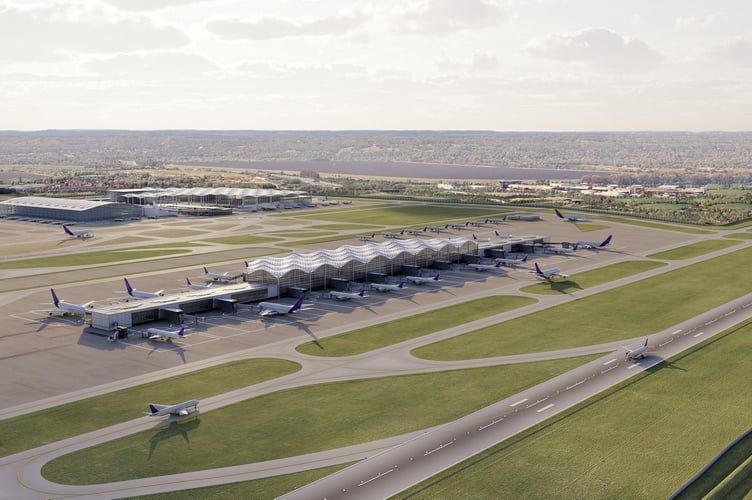
Heathrow Airport has begun working on its third runway planning application with the aim of getting the green light by 2029.
Last November, the Government indicated that the West London hub’s plan, which involves re-routing and tunnelling the M25, would be the preferred basis for expansion.
A second, less disruptive, option that featured a smaller runway put forward by Arora was rejected.
Now, Heathrow has announced it will begin getting its blueprints in order – in what it has called a significant step forward for the UK’s most important growth project.




The Government will still need to push through regulatory and policy decisions this year that will determine whether the £33billion 3,500m long runway project can proceed.
If built, it would increase the number of flights at Heathrow to 756,000 a year, with 150million people expected to use the airport. In 2024, the airport handled 83.9 million passengers while operating at 99 per cent of its annual flight capacity of 480,000.
Heathrow CEO Thomas Woldbye said: “Expansion is taking another significant step forward today as our board greenlights starting work on the planning application.
“This decision means we are on track to secure planning permission by 2029 and reflects Ministers’ renewed commitment to expansion and progress made to speed up delivery of the project to boost UK economic growth.
“Heathrow expansion is a critical national project and a central part of our journey to make Heathrow an extraordinary airport, fit for the future. Maintaining momentum will mean the CAA and Ministers remain focussed on securing the benefits of the project by meeting vital milestones in 2026 that are essential to enabling the next phase of delivery.”
Heathrow argues expansion would drive long-term economic growth and see billions invested into the UK while strengthening airline networks and enhancing the UK’s global trading links.
Critics slam the plans for the devastating impact it would have on the environment and challenge the financial benefits saying they are both overstated – and with many of extra passengers being transit, the benefits would be felt elsewhere.
Others believe the airport is already too close to London and Surrey and the added noise would blight millions of lives.
The Government believes the project can be delivered while meeting national environmental targets.
The timetable for the complex project has the runway coming into operation by 2039.
Key dates to look out for before then include Spring 2026 when the Civil Aviation Authority is expected to provide clarity on early stage project costs.
In the summer the Department for Transport is scheduled to publish its draft Airports National Policy Statement.
In the autumn, Parliament will decide on the project’s planning framework.
Comments
This article has no comments yet. Be the first to leave a comment.