
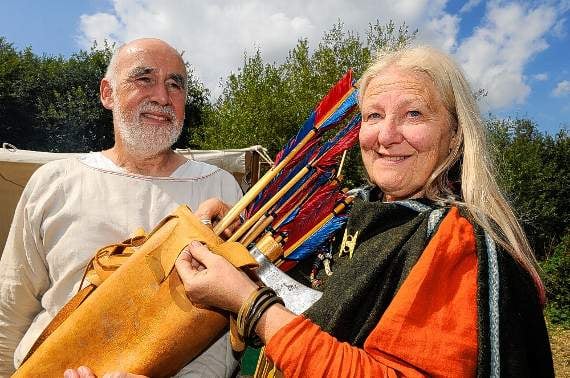
PETERSFIELD Heath was transformed into a ‘horrible histories’ extravaganza over the weekend for a celebration of the history and wildlife of the beauty spot.
The now annual Secrets of the Heath event was put on by South Downs National Park Authority (SDNPA) as a showcase for the Heathlands Reunited Heritage Lottery Funded project.
The project, the SDNPA is one of the 11 partners, aims to provide “bigger, better and more joined up heathlands,” a spokesman said.
And despite the wet weather on Sunday, the free event on the Heath was well attended.



During the course of the weekend, families were able to enjoy, and take part in, the many re-enactments which charted man’s involvement with heathlands.
These included Stone Age flint napping and a demonstration of Saxon fighting skills, and Roman archery.
Medieval weaponry was on show, and there was a falconry display, with hawks swooping across the Heath to take titbits from a handler.
Present day heathland management techniques were also demonstrated, and there were grazing livestock.
Visitors could admire snakes and lizards who call heathland home.
A new attraction this year was a Victorian butterfly collector, who arrived on a penny farthing bicycle.
And in between touring the many stalls, stands and encampments, visitors could relax and enjoy locally brewed beer in the beer tent.
Bruce Middleton, of the South Downs National Park Authority and its heathlands project manager, said: “We are delighted that this event now has such a large following from the local area.
“It is such an enjoyable way to help people appreciate just how valuable our heathland sites are and the colourful history they have had over the centuries.
“The Heathlands Reunited project is now in its second year.
“And hopefully it will ensure that our heathland sites are looked after for the generations to come.”
He also said that heaths have become “islands,” where isolated plants and animals are far more vulnerable to local extinction.
This habitat is home to some of our rarest wildlife including all 12 of our native reptiles and amphibians.