
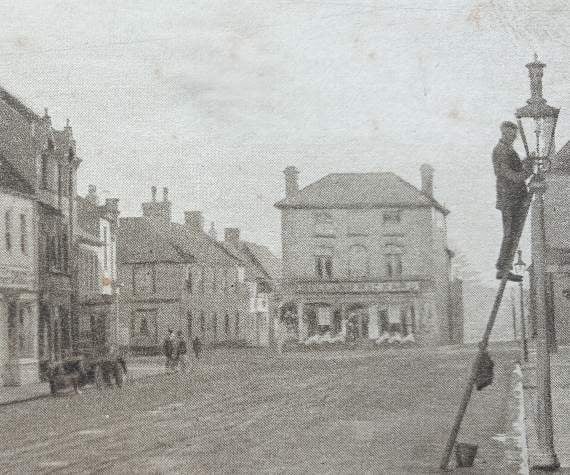
The Georgian era was a significant part of Petersfield’s history, bringing change and development to the little market town.
The period spanned the years 1714 to 1837 and covered the reign of George I, George II, George III and George IV.
George IV’s rule as Prince Regent from 1811 to his coronation in 1820 resulted in the later part of the Georgian period being known as the Regency.
The Georgian era is often extended to include William IV who followed George IV and was the last monarch before the Victorian period.
 VIDEO: Merry motorcade as thousands around East Hants and Sussex cheer on tractor run
 Fury in Froxfield as East Hampshire landlord tells Labour MPs: "You're barred"
 Concern at disappearance of white-tailed eagle as tracker found near Petersfield
 Roads underwater as isolated flooding reported around Herald & Post area
Daniel Defoe, author of Robinson Crusoe, travelled through Petersfield at end of 17th century and described it as “a town eminent for little but its being full of good inns”.
The abundance of ‘good inns’ was thanks to Petersfield’s prime location on the London-to-Portsmouth road.
During the Georgian period the town gained much wealth through its role as a staging post for regular horse-drawn stage-coach services that passed along the route.
By the 1820s there were between 80 to 100 scheduled coach services running along the road every week.
Many of the sights we recognise as quintessentially Petersfield have their origins within this period.
The character of the town still retains much of the ordered Georgian detailing seen in the architecture of the time, such as on Lyndum House, Dragon House, Winton House and The Old College.
Another icon of the town, the Heath Pond, was also created during this time.
Before 1720, the land in the south-western end of the heath was boggy and had been dug for peat for many years.
Cattle were taken there to drink but some became stuck and drowned.
Determined to end this, a group of residents got together to create one big pond. They excavated about 22 acres of marshy land, tipping the spoil to create what is now called Music Hill.
But Britain’s wars with France were to overshadow much of the Georgian period.
The French Revolutionary wars started after the execution of the French king Louis XVI in 1793 and continued almost without a pause until 1815, when Napoleon was defeated at Waterloo.
Although Petersfield was far from the battlefields, the town was affected by the war in many ways. Because of its location on the road between London and Portsmouth, the town was almost constantly full of soldiers, on their way to or from the south coast.
It was not only British soldiers who came to Hampshire. Spanish and French prisoners of war were held in Portchester Castle and on board old ships moored in Portsmouth Harbour.
Captured enemy soldiers and sailors were also held in Winchester, with paroled French and Spanish officers billeted at inns and with private individuals around the county, including in Petersfield, Alresford and Odiham.
Frenchman’s Road in the west of the town is said to be named after French prisoners of war who quartered in the town while working on the Portsmouth Road.
However, evidence of such prisoners is lacking.
But there were French prisoners on parole in Petersfield in 1756 to 1763 and from 1793 to 1802 living in private houses.
Letters preserved in Hampshire Record Office show the Bonham brothers, Henry and Thomas, welcomed French officers at Castle House in the Square.
Along with sharing dinners and books with their French guests, they even lent them money!