
FOR CENTURIES, among industries associated with rural areas have been those related to the production of leather.
Leather is created from animal skins and, with the large number of sheep on the South Downs and oak trees for the raw material of tanning, Hampshire and West Sussex were ideal centres for the trade.
Buriton also had the advantage of its lime works which supplied lime for washing skins as part of the process in producing leather or parchment.
In a new book by Ralph Cousins, Parchment and Glove Making in Havant, Buriton’s local historian Doug Jones has contributed a section on the Stallard family, who had roots in the village before moving to Havant.


“Edward Stallard was baptised in Buriton in 1792 and married his wife, Charlotte, in 1812. During his time in the village, he appears to have had a number of occupations including publican, collar-maker, a fellmonger – someone who prepares hides for leather making – and a parchment maker.”
The earliest of Edward’s known ancestors lived in Catherington but, aside from their names, little of their story is known.
Edward’s grandfather, William Stallard, moved to Buriton on marrying Olive Patrick, who was from the village, in 1787.
“Edward Senior paid for his 14-year-old son, Edward, to be apprenticed to local carpenter Henry Hall. Perhaps he showed no promise in woodworking as he was soon employed with his father in the family trade of leather working.
“Grandfather William’s occupation is unknown but each of his three sons, William, James and Edward Senior, were leather workers or fellmongers.”
Uncle William manufactured leather gloves and his wife was a milliner or hat maker. They ran a shop at 30 High Street, Petersfield.
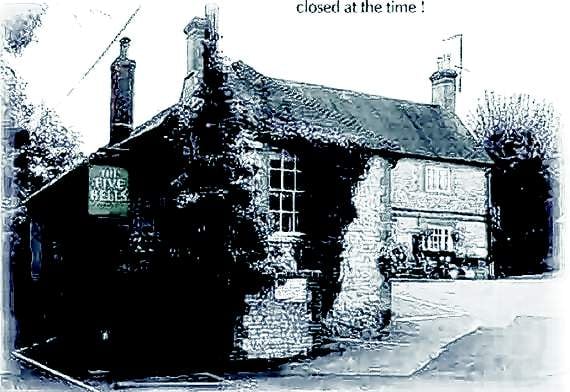
Edward was a saddler and, after marrying Alverstoke girl Ann Chalcraft in 1837, he returned to Buriton where his father had taken over the Five Bells.
“For a short time, both Edward and his father split their efforts between the pub and leather working.
“Some time around 1840, Edward Senior took over the parchment yard in North Lane.
“By the time of the census in 1841, it is clear that the family, who were living in North Lane, Buriton, was heavily involved in parchment making. A yard just north of what is now Pillmead House is thought to be the location of their business.
“Edward’s sons, George and Albert – baptised in 1828 and 1831 respectively – assisted their father as parchment makers and the family continued to work in Buriton until about 1847 when they moved to the Homewell Parchment Yard in?Havant.”
Although Edward Senior was declared bankrupt in 1844, he took over management of the Havant works owned by Charles Fauntleroy in 1847.
* Parchment and Glove Making in Havant by Ralph Cousins is available from the Spring Arts Centre in East Street, Havant.