
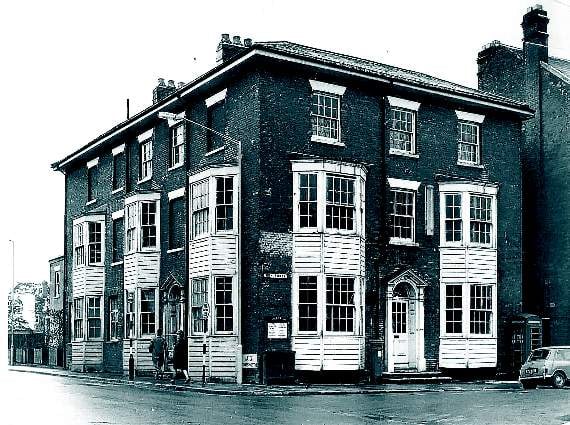
THE CIVIC Amenities Act of 1967 has had an enormous influence on the appearance of many of our towns and villages, including a number in East Hampshire, because of the introduction of laws on preservation of the character of a place.
In the intervening 50 years, nearly 10,000 areas throughout the United Kingdom have been deemed considered worthy of preservation or enhancement because of their special architectural or historic interest.
In East Hampshire, there are 45 conservation areas, ranging from the town centres of Petersfield and Alton to the hamlet of Chalton with many village centres containing old buildings being in the listing because when judged as a group together the buildings create a certain character recognised as worth maintaining.
Currently, the conservation areas are administered by East Hampshire District Council, the oldest of which, established in 1968, were Buriton and East Meon.




Since 1976, all of the centre of Petersfield is within its conservation area, apart from shopping mall Rams Walk. Other communities in the district with groups of buildings worthy of preservation include Catherington, Froxfield, Greatham, Hawkley, Horndean, Liphook, Liss, Privett, Rowlands Castle, Selborne and Sheet.
The legislation means that if someone who lives in or runs a business from a property in a conservation area wants to make alterations to their building, such as cladding, inserting windows, installing satellite dishes and solar panels, adding conservatories or other extensions, laying paving or building walls, the council will have to give permission and may lay down conditions relating to materials if the work is allowed.
Trees are regarded as important parts of the landscape in built-up areas and, again, when trimming or other work is planned on them, council approval will be needed.
It was demolition and clearance of sites, both piecemeal and wholesale, in the 1960s, when post-war prosperity meant the centres of cities and towns were being rebuilt and “modernised”, which led to the Civic Amenities Act being passed and attempts made to halt destruction of historic areas.
To some extent, it was too late for Petersfield which lost a number of buildings through the actions of London developers the Raglan Property Trust, which bought town centre sites whenever they became available.
Flats at Swan Court – originally offices – and Garden Court were the first properties built by Raglan in the town and the company went on to buy many buildings on the south side of High Street, culminating in ownership of the former Girls’ High School, previously the Dolphin Hotel and others, including the 16th century house known as Clare Cross and the Edwardian Post Office, all of which were knocked down in 1965 and made way for the shops and flats of Dolphin Court opposite the war memorial.
Among opposers of the changes were members of The Petersfield Society, a group which still campaigns to guard the town’s environment.