
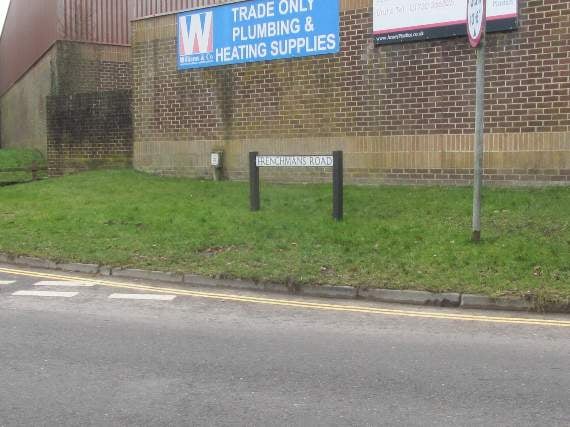
NEWCOMERS to the Petersfield area may wonder if the street west of the town’s railway station and running parallel to it, Frenchmans Road, may be linked with the cosmetics firm Estee Lauder.
It is true the name ‘Estee’ was chosen by the American company’s founder to make herself sound French and that the firm’s original headquarters – demolished early this year – was called Paris House but the real story behind Frenchmans Road is 250 years old.
The Seven Years War, from 1756 to 1763, has often been described as the First World War because it involved a number of nations forming alliances in a power struggle, with France and Britain on opposing sides. As a result of the hostilities, prisoners of war were taken in quite large numbers with many of the French captives being brought to this country by ships returning to Portsmouth.
At first, the lower ranks of sailors and soldiers were kept in places such as Portchester Castle then, as numbers increased, in redundant ships known as prison hulks moored in the harbour. However, officers were treated differently.

Under the control of a parole agent, they were billeted in private homes in so-called ‘parole towns’, of which Petersfield was one. The term ‘parole’ derives from the French translation of ‘word’ but was used in the context of ‘word of honour’. This developed into its use by prisoners of war who gave their word of honour not to escape if they were allowed some freedom of movement.
This was how Frenchmans Road gained its name for it was the western boundary of the area within which the town’s prisoners had to stay during the day.
In Bishop’s Waltham, there is a bridge over the River Hamble on the edge of the village which was known as Frenchman’s Bridge for the same reason.
Alresford has the graves of five former prisoners of war in the parish churchyard and one of its previous parish priests included references to the men on parole in his history of the town, which gives some detail of how they lived and were regarded by the community in which they were billeted.
In ‘parole towns’, the following notice was posted: “Notice is hereby given: That all such prisoners of war are permitted to walk or ride on the great turnpike road within the distance of one mile from the extreme parts of the town (not beyond the bounds of the parish) and if they shall exceed such limits or go into any field or cross-road they may be taken up and sent to prison, and a reward of ten shillings will be paid by the agent for apprehending them. And further that such prisoners are to be in their lodgings by 5 o’clock in the winter and 8 in the summer months, and if they stay out later they are liable to be taken up and sent to the agent for such misconduct.”
Apart from retaining the name Frenchmans Road, there is little publicly-available evidence of Petersfield’s time as a parole town but it is believed some of the French men were used as labour to build the A3.