
EIGHTY-TWO years after her death, Lady Alice Acland is back in the news in East Hampshire.
Acland Close is one of the names proposed by developers at Whitehill and Bordon for part of the estate being built on the old garrison.
However, town councillors there have asked for suggestions more in keeping with their part of the district rather than Petersfield, where the future Lady Alice was born.
Alice Cunningham was born on February 3, 1849, to the Rev Francis Macaulay Cunningham and his wife, the former Alice Charlotte Poore.




Her father was a writer on church affairs and she was well educated for the time.
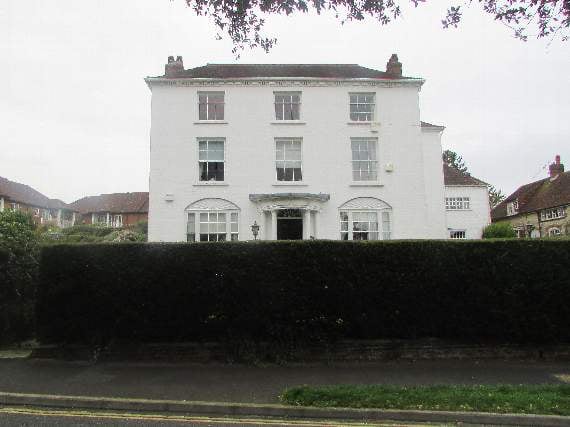
The family’s home, close to Petersfield Heath, is listed as Grade II* and is an imposing late 18th century three-storey house.
When she was still quite young, Alice moved with her family to Oxford and it was there she met her future husband, Sir Arthur Dyke Acland, who became a deacon in the Church of England in 1872 and a priest in 1874, the year after the couple married.
However, to take up a political career, Arthur retired from holy orders in 1879. He became a Liberal politician and author. The couple had three children.
It was through her husband’s campaigning that Alice became involved as a pioneer of women’s rights.
Arthur was an advocate for educational opportunities for working-class men and his wife travelled with him on speaking tours which led to her own involvement in providing more opportunities for working-class women.
She saw the value of the Cooperative movement and its potential to provide opportunities for women, since women held purchasing power for their households.
Alice began writing articles about women’s lives for Cooperative News. On January 6, 1883, the editor of Cooperative News, Samuel Bamford, created the column Women’s Corner and appointed Alice as editor.
Her first appeal set in motion women’s role in the Cooperative movement, stating: “In this matter of co-operation why should not we women do more than we do?
“Surely, without departing from our own sphere, and without trying to undertake work which can be better done by men, there is more for us women to do than to spend money.
“Spend our money at our own store we must, that is a matter of course; but our duty does not end here, nor our duty to our fellow creatures. To come and ’buy’ is all we can be asked to do; but cannot we go further ourselves?
“Why should not we have our meetings, our readings, our discussions?”
The popularity of Alice’s column led to co-ordination of the Women’s League for the Spread of Co-operation, soon after renamed the Co-operative Women’s Guild.
The guild was formally inaugurated in June 1883. Alice served as general secretary of the guild in 1883, but resigned from the position due to ill-health. She served as president from 1884 to 1886, again resigning due to further health problems.
However, Alice lived until she was 86, dying in London on July 5, 1935.