PETERSFIELD local historian David Jeffery was particularly interested in the Nostalgia features about French prisoners of war in the town as he has researched and written about them too.
He visited Hampshire Record Office and examined the original 16 letters, two cards and verses of the French national anthem.
He wrote: “The physical appearance of these letters is almost as it might have been when they were written and received over 200 years ago; most had been folded inwards four times into a shape approximately 12cm square, some still bore fragments of their original seal and they were variously addressed to: Monsieur Bonham en son hôtel à Petersfield; A Monsieur Bonhomme Seigneur de Petersfield; To the Right honorable Sir Bonham Esq at Petersfield; Monsieur Bonham à Petersfield; or, simply: M Henry Bonham, Esqre or M Henry Bonhomm, assuming the whereabouts of the addressee to be known.
“They would probably have been handed to the nearest passing coach or post-chaise, the recipient paying for the postage upon delivery.




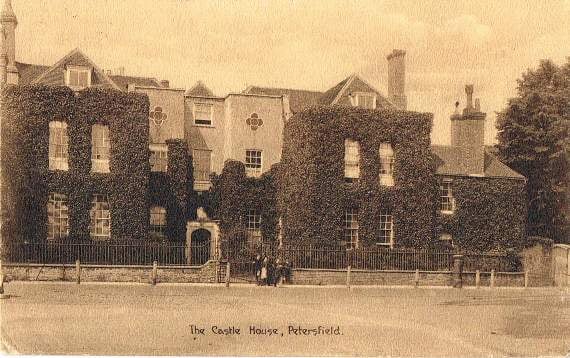
“Henry Bonham and his brother Thomas, neither of whom married, were the children of John and Ann Bonham. They lived together for many years at Castle House in The Square in Petersfield which their father had acquired from the Jolliffe family in 1749, the year Henry was born.
“This was the ‘hotel’ – contemporary French for a large private residence – referred to in the letters. Both men were renowned for their interest in cricket and were on the committee of the famous Hambledon Cricket Club, both served as model citizens and magistrates and both belonged to the volunteer unit, the Petersfield Infantry.
“Castle House was not only the most imposing building in The Square, it also boasted extensive gardens and stables.
“The Bonham Carter family lived there until 1858 when they built Adhurst St Mary, but it remained in the possession of the family until it was pulled down to make way for the Post Office and HSBC Bank.”
“Henry Bonham bought the Buriton estate and manor house for the family in 1798 but neither he nor his brother ever lived there. Henry died in 1800 at the age of 51.
“There was quite clearly an affinity, perhaps political, but certainly social and cultural, between Henry Bonham and the Frenchmen he befriended at Castle House.
“The Bonhams were innately pacific and loathed the French war but, as gentlemen, must have recognised in the French officers a similarity of cultured upbringing to their own.
“Henry himself was a fair scholar, owned an excellent library with many French volumes, and was a most generous host. Convivial dinner parties and shooting expeditions were no doubt the order of the day. Henry even gave small loans from time to time and all this hospitality was, naturally, gratefully appreciated by the French officers.”