
THE WAR against Japan began without warning with the invasion of British Malaya on December 7, 1941, and an early morning air attack the next day on December 8 against the United States Navy at Pearl Harbor.
The speed and savagery of the attacks and follow-up campaign gained Japan large areas of the Pacific and Asia, including Malaya, Burma and Singapore.
However, the success of the Japanese left their supply lines so stretched that the campaign ground to a halt.
But by then, tens of thousands of Allied servicemen had been killed or captured.



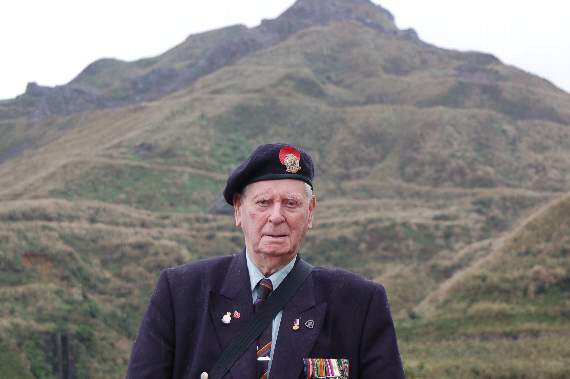
Aged just 20, Royal Artillery despatch rider Ken Pett from Petersfield was with his regiment on the Malaya Peninsula when the Japanese landed.
He was in a convoy cut off from the main British forces when the Japanese came ashore at Kota Bharu on the east coast of the peninsula.
Eventually the unit managed to get back to the British lines, where Ken found himself helping defend an Allied airfield from the Japanese:
“They came in three screaming hordes led by officers waving Samurai swords.”
At the battle of Slim River, Ken was with the Argyle and Sutherland Highlanders.
“The Japanese came rushing down the road, blowing bugles and waving banners.“
After suffering heavy casualties, the British were forced to fall back; only after the war did an account of a Japanese atrocity surface.
In a rubber tree plantation were a number of Argyll wounded; the Japanese shot and bayoneted those who couldn’t walk, and forced the survivors to bury them.
The war against Japan ended after atomic bombs were dropped on the cities of Hiroshima on August 6, 1945, and Nagasaki, on August 9.
Ken, who had by then been a PoW in Taiwan for more than three years, said: “I was ill and by ending the war quickly the bombs saved thousands of lives, like mine. We were thankful for them.”
Comments
This article has no comments yet. Be the first to leave a comment.