
WORK supporting troubled families in Hampshire has attracted the interest of a prestigious university in the United States.
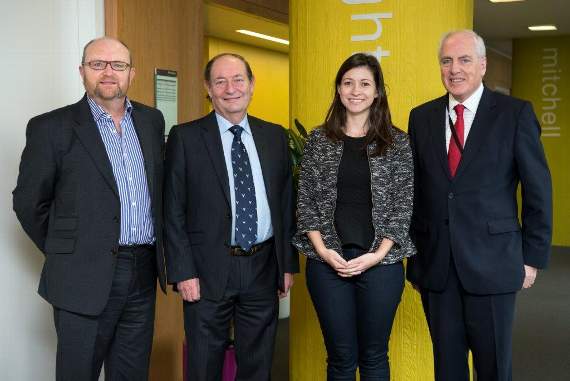
This week, Hampshire County Council’s Deputy Leader, Councillor Keith Mans, welcomed Harvard Kennedy School Government Performance Lab Innovation Fellow, Christina Economy, for a day that included a briefing on the progress of the programme in the county.
Ms Economy is on a fact finding mission on behalf of Harvard Kennedy’s Government Performance Lab.
Councillor Mans, who also chairs the Supporting Troubled Families Strategic Group, said: “I am delighted to see that the positive outcomes we are delivering for families in Hampshire are being recognised on an international scale.”



The programme aims to turn around the lives of at least 5,560 Hampshire families with multiple, complex and persistent issues including unemployment, poor school attendance, involvement in crime and antisocial behaviour, problems with drugs and/or alcohol.
Councillor Mans added: “The first year of the programme alone exceeded its Phase One goal to reach 1,590 families – in fact supporting nearer 2,000. Meanwhile, independent evaluation of the programme to date, has also highlighted its success.
"We know that one year on, after completing the programme, four out of five families supported between 2012 and 2015 have improved school attendance for their children; they have fewer school exclusions; lowered youth offending/anti social behaviour rates; and are remaining in work or training - and no longer claiming an out-of-work benefit.”
Leading the independent evaluation of Phase 2 of Hampshire’s Supporting Troubled Families Programme, is Professor Steven Henderson from Southampton Solent University.
He also joined the briefing to share with Councillor Mans and Christina Economy, some of the initial outcomes and emerging issues.
Professor Henderson commented: “This kind of project is well suited to the methodology used at Southampton Solent University. The family problems are complex and deep-rooted and do not lend themselves to simplistic solutions and measurements.
"By focusing on what works for whom and why, we will be able to evaluate process variety; assess stakeholder engagement; and simulate the costs saved by the project’s successes. In other words we are hoping to show how this project can improve the lives of families in difficulty and save public money.”
Over the course of the day, Christina met with key partners in the programme, including police and health experts.
She also had the opportunity to speak with families about their experiences of the programme, as well as local support workers.
Phase two aims to engage with a further 1,200 Hampshire families each year between 2015/16 and 2019/20, including those where violence in the home and health issues (mental and physical) are a feature.
Families who are most at risk of eviction, or who are struggling financially will also be supported