

The streaming hit that is Clarkson’s Farm returned to screens last week for its fifth season.
The opening episode followed novice farmer Jeremy Clarkson’s latest challenge - attempting to manage a flock of “easy-care” sheep. While amusing in places and mind-boggling in others, it also offered a valuable insight into just how difficult farming, and particularly sheep farming, can be.
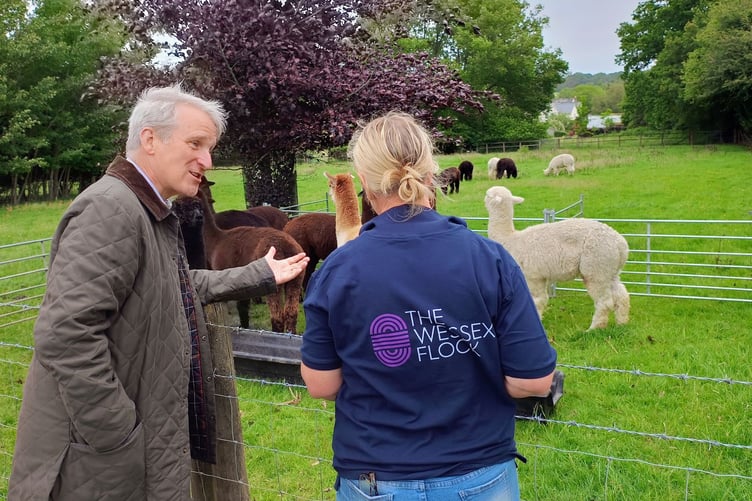
Last weekend, I had the opportunity to visit a very local flock at a family farm in Ropley as part of Open Farm Sunday. The 6,000 sheep in question were New Zealand Romney ewes, forming part of the Wessex Flock under the careful stewardship of Gordon and Liz Rough.
Open Farm Sunday is a national initiative designed to celebrate British farming and connect communities with agriculture. Since it began 20 years ago, more than 3.5 million people have visited farms across the country to better understand where their food comes from and how it is produced.




The event in Ropley attracted more than 1,000 visitors from across Hampshire. As well as learning what life as a sheep farmer really involves (my overwhelming takeaway being that it is an all-consuming and incredibly demanding job) there were demonstrations of sheep shearing and sheepdog handling, alongside opportunities to meet the animals and learn more about wool production.
One of the more unexpected discoveries for me was the role of alpacas as ‘bodyguards’ for the flock, protecting sheep from dog attacks. Who knew?
The sheep roam across 1,500 acres of Hampshire countryside year-round and are clearly a much-loved part of the family, as Liz explained during my visit. Set against the bright green (recently rained on) fields, the woolly flock is quite a sight to behold.
The Wessex Flock’s ethos is “naturally raised, thoughtfully crafted, proudly local”, and that philosophy runs through everything they produce. From beautifully spun yarn and sheepskins to clothing and lamb boxes.
Their commitment to using nearby suppliers and factories wherever possible also helps keep production local and sustainable.
Alongside the sheep, the farm is home to (the aforementioned) alpacas, pigs, chickens, calves and sheepdogs, as well as around 7,000 lambs.
Farming remains hugely important to East Hampshire. More than 35,000 hectares of land in the district is farmland, with over 24,000 sheep grazing across our green fields.
Agriculture is not only central to our landscape and rural identity, but also a major employer and contributor to the local economy. So farms like The Wessex Flock need our support.
Farmers have faced an incredibly tough few years, so it was heartening to see so many people enjoying and appreciating the work that goes into farming and the care devoted to animal welfare. I also noted, during my brief time with The Wessex Flock, that sheep shearing is considerably harder than it looks.
Comments
This article has no comments yet. Be the first to leave a comment.