
Last Friday marked Eid, one of the happiest days in the Islamic calendar — a time for prayer, family and community. Instead, many Muslims in Britain found themselves defending their faith and place in society.
Recent comments by politicians suggest that visible Muslim faith is somehow threatening or divisive. It is a narrative becoming increasingly common and increasingly normalised.
We are now at a point where anti-Muslim language is entering mainstream political discourse in a way that should concern us all. The controversy surrounding remarks about a “tartan burqa” is just one example of how casually Muslims are being used as political talking points.
It is welcome that the Prime Minister and others have condemned such comments. But the fact they needed to be condemned at all shows how far the tone of debate has shifted.


At the heart of this issue is a simple principle: equality.
Britain has long allowed people of all faiths to express themselves publicly. Christmas events, Diwali celebrations, Vaisakhi gatherings and festivals such as Hanukkah are all visible and accepted as part of national life. If Muslims are denied the same space, the issue is no longer fairness - it is discrimination.
The suggestion that Muslims gathering briefly to pray or break their fast amounts to “domination” is simply wrong. There is a clear difference between practising faith and imposing it on others. No one is being forced to participate or told how to behave.
Within the Ahmadiyya Muslim Community, mosques regularly host open iftars where people of all backgrounds are invited. The aim is not to impose beliefs, but to build understanding and share something positive. These small acts often do more to bring communities together than divide them.
There is also a contradiction in the current debate. Many on the political Right speak about Britain’s “Judeo-Christian heritage”. If that heritage is to mean anything, it should reflect values of fairness, responsibility and coexistence — not the exclusion of one faith.
Yet Muslims are often told to integrate and be visible, only to be criticised when they do exactly that. That inconsistency is difficult to ignore.
Islam teaches a clear principle: “For you your religion, and for me mine.” Faith is not to be imposed, but practised freely alongside others.
It also teaches that loyalty to one’s country and service to humanity are part of faith itself. British Muslims are part of the fabric of this country, contributing to the NHS, armed forces, business and beyond.
The concern now is where this rhetoric leads.
When public figures repeatedly frame Muslims as a problem, it does not remain confined to political debate. It filters into everyday life and risks ordinary people — including women and children — being targeted or harassed.
If the implication is that Muslims should be treated differently under the law, it should at least be stated openly. Quietly creating a situation where one community has fewer rights undermines the very idea of equal citizenship. History shows where that kind of thinking can lead.
At a time when Britain faces many challenges, unity should be strengthened, not weakened.
Eid should have been a moment of shared celebration — a reminder of the diversity that enriches this country. Instead, it became another moment where Muslims felt the need to justify something as simple as practising their faith.
We should expect better.
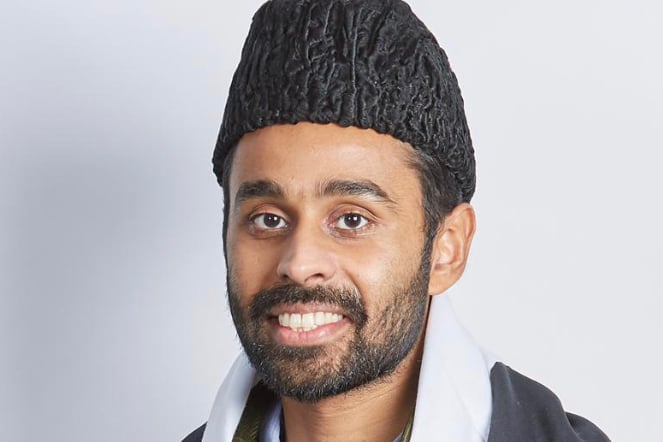
*Abdul Quddus Arif is an Imam with the Ahmadiyya Muslim Youth Association UK.
Comments
This article has no comments yet. Be the first to leave a comment.