
One television weather presenter remarked recently we were enjoying – or enduring – “a typical British summer”.
And it seems August is continuing July’s trend for throwing the full gamut of weather conditions at us.
As with any outdoor activity – and engine-less aviation in particular – hang gliding and paragliding are very dependent on the weather.
Flying in rain is a no-no, but the dominating factor is the wind. A consistent breeze with a strength between 10mph and 20mph is ideal.

.jpeg?width=209&height=140&crop=209:145,smart&quality=75)


Paragliders prefer lighter winds while hang gliders operate best in slightly stronger conditions.
The wind direction is equally important as this will determine the best location to fly.
Like the birds, both types of foot-launched aircraft must take off and land into the wind, which means launching from a suitable hill facing the breeze.
A ‘suitable hill’ is both steep and wide. This forces the wind up and over the slope, generating the important ‘dynamic lift’ band of rising air which supports the wings aloft.
It is perfectly possible to fly in no wind at all, but the consequent absence of dynamic lift invariably results in a short flight to the fields below.
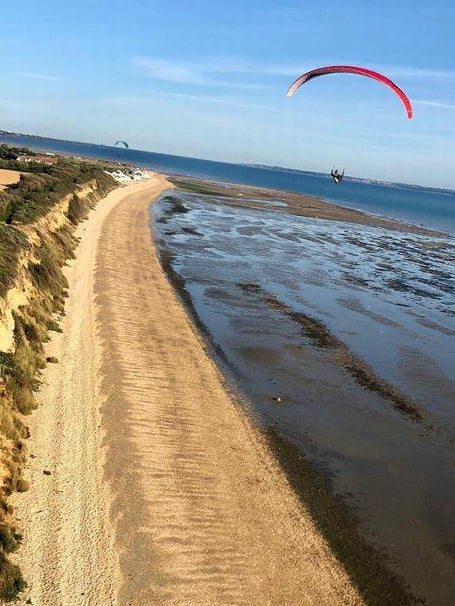
The Sky Surfing Club is fortunate to have permission to fly from a number of local hills, all of which are close to the coast.
At this time of year sea breeze incursion often affects the air inland, so that by afternoon the wind has switched direction from a gentle northerly to a brisk south-westerly.
When this happens, the options are to move to the small cliffs at Meon Shore which border Southampton Water – or pack up and go home.
The weather forecasts are always studied in very great detail so Sky Surfing Club’s pilots are ready for the next appearance of suitable flying conditions.
Brian Parkins