
THE GEORGIAN period in British history is generally regarded as being from 1714 when the Hanoverian George I ascended to the throne after the death of his second cousin Queen Anne.
The following 123 years were a time of change and development in towns and countryside, at home and abroad.
It was a significant time in Petersfield’s history and a new temporary exhibition at Petersfield Museum illustrates how the town changed in the era of Jane Austen and her contemporaries.
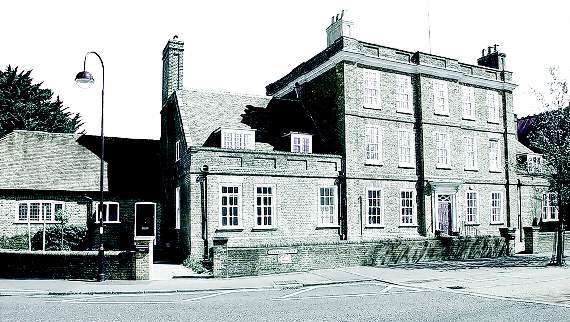
Grand buildings were springing up in the town centre, such as the Churcher’s College and Petersfield House.

Petersfield House was built in the early 1730s by John Jolliffe, between what is now Hylton Road and St Peter’s Road on land he inherited from his first wife, Catherine. This also brought control of one of the borough’s two parliamentary seats.
He used that to return his uncle, Sir William Jolliffe, as MP in 1734 and then bought the manor of Petersfield from Edward Gibbon, of Buriton, which gave him control of the second seat.
A new access was made for Petersfield House by taking land from the rear of the burgage plots on the south side of High Street. This new road had an elegant circus for the approach to the house.
In 1757 the statue of William III was erected in the circus – today that would be in the road in front of the old police station, which is now the museum.
Even the statue had a vote and Petersfield attained the unwanted status of being a ‘rotten borough’.
John Jolliffe sat as MP for Petersfield from 1741 to 1754, and again from 1761 to 1768.
John Bonham Carter, a member of another high-powered family resident in Petersfield, helped to draft the Reform Bill which put an end to the corrupted politics of rotten boroughs across the country.
Developments in trade and transport also helped to raise the profile of the small town.
Churcher’s College was established through funds left in the will of Richard Churcher who made his fortune through interests in the British East India Company and wanted boys to be educated to follow in his footsteps.
Petersfield also saw an increase in traffic, partly due to soldiers passing through the town on their way to fight France in the Revolutionary and Napoleonic wars.
Australia and New Zealand were settled as British colonies during this period and the United States of America came into being as a result of the War of Independence.
Petersfield was a well-known staging post on the London to Portsmouth road and had many coaching inns to accommodate the traffic between the premier naval port and the capital.
Other businesses in Petersfield were thriving and Jane Austen’s brother, Henry, opened a bank to serve its residents, although this failed as did a number of other banks, within a few years and was taken over by a larger bank.
* Petersfield Museum in St Peter’s Road is open 10am to 4pm, Tuesday to Saturday. Adult entry fee applies.