
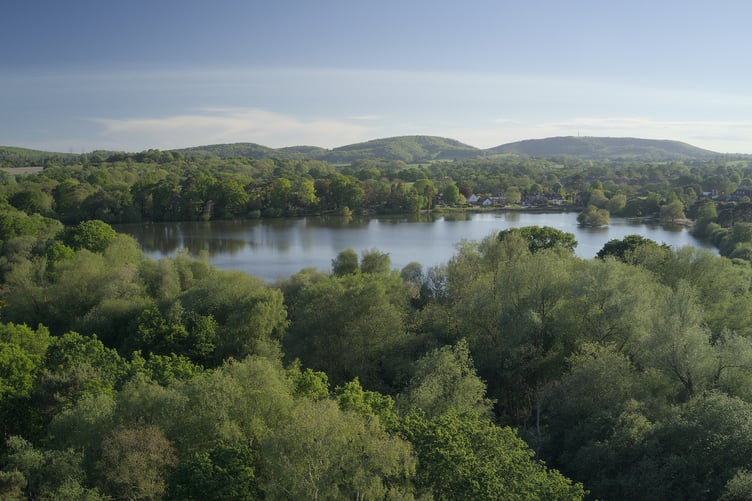
What will the South Downs National Park look like in a generation’s time — and what role can it play in tackling some of the biggest challenges facing society today?
Those questions are at the heart of a new five-year masterplan unveiled by the National Park Authority and its partners.
The plan aims to build the natural infrastructure needed to tackle nature loss, pollution in rivers, flooding, water shortages and the ever-increasing risk of wildfires, while shaping a more resilient and welcoming landscape for the future.
The ambitious strategy for the South Downs National Park includes helping more young people take action for nature, making the park more welcoming and accessible for all, and protecting and improving its precious dark skies.




Its publication comes as a government national security assessment released last week concluded that continued biodiversity loss and ecosystem collapse pose serious risks for food security, energy, water supplies and geopolitical stability.
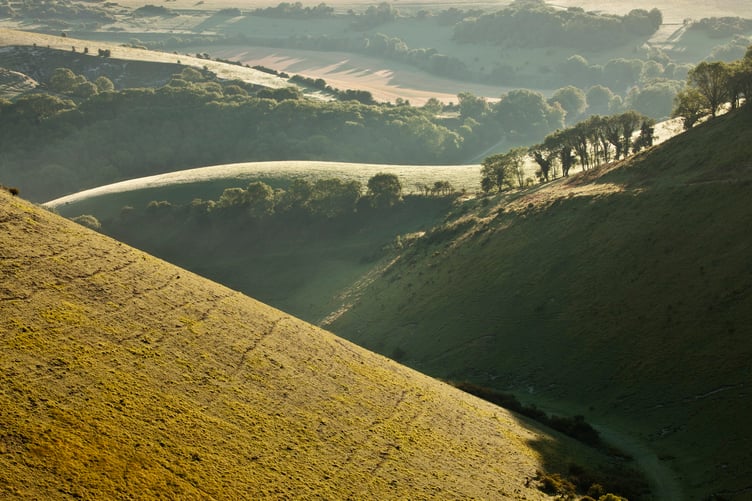
Working alongside a range of partners including farmers, environmental organisations, communities and businesses, the National Park Authority has adopted its Partnership Management Plan — described as the most important document for any National Park. The strategy sets out what the Authority and its partners want to deliver over the next five years.
The plan is the next step towards the National Park’s vision for 2060, to create a thriving, buzzing, nature-rich South Downs, which has been developed over 18 months following several rounds of consultation and engagement across the region.

A range of ambitious targets have been agreed, including increasing tree canopy and woodland cover by the equivalent of 4,200 football pitches — 2,625 hectares — by 2031 to help store carbon, soak up water and create vital new havens for wildlife.
A further goal is to restore or create more than 3,300 hectares of wildlife-rich habitats by 2031 — an area the size of Worthing or Hayling Island. These new havens will be outside existing protected nature sites and are intended to significantly boost regional biodiversity in the long term while increasing resilience to higher temperatures and flooding.
Together with the additional woodland cover, new wildlife habitats and other measures, the National Park will be able to absorb more greenhouse gases from the atmosphere and help to tackle climate change.
Clean water is another key focus, with a goal that all waterbodies in the National Park achieve “high” or “good” status by the end of 2027. The commitment follows a major study last year which showed that most bodies of water are currently failing to meet good ecological standards.
The plan also commits to engaging with 2,500 schools inside and outside the National Park and delivering 500 nature-based activity sessions for young people. It comes as the Government’s recent climate change and mental health report highlighted that young people are especially vulnerable to the mental health impacts of climate change, while NHS statistics show record rates of anxiety among children.
The plan covers the whole National Park and can only be delivered in partnership with farmers, landowners, local authorities, the health sector, water companies, businesses, schools, charities and communities.

Sion McGeever, chief executive of the National Park Authority, said: “This new partnership plan is hugely ambitious – and rightly so because our wonderful National Park deserves nothing less.
“National Parks have the answers to so many of the challenges facing our society today, including biodiversity loss, flooding, wildfires, water shortages, and rising mental health issues. We can build this natural, green infrastructure by planting more trees, improving our soils, transforming waterways, increasing food security and providing that access to nature that so many people need for their wellbeing.
“This plan asks us all come to together and step up what we can collectively achieve to bring about real and lasting change across the South East so that we can create a better future.
“The South Downs National Park was designated for us all and it will take us all to achieve the aims in this plan. This is an outward-looking plan, so it’s very much about what we can achieve together at a regional and national level.
“As a human race we’re facing the biggest challenges of our time and National Parks have a key role to play – as hubs for nature recovery and climate action and, perhaps most importantly, places of hope.”
Vanessa Rowlands, chair of the South Downs National Park Authority, said: “I’d like to thank each and every person who has contributed to this plan, including members of the public and the many partners who have got behind it.

“It’s a collective effort and we must build on what is working, acknowledge what isn’t, innovate, try new things, create new partnerships, and challenge ourselves. This plan is a powerful call to action and everyone can play their part in creating a brighter future.
“Young people are the future custodians of this amazing place, so I’m really pleased that we’re putting a big emphasis on engagement with them.”
The Partnership Management Plan sets out seven collective priorities between 2026 and 2031: nature recovery, climate action, clean water, young people, welcome and access, arts and heritage, and a thriving, greener place.
Among the other key targets are completing a total of 300 new affordable homes by 2031, with planning permission for a further 500; expanding the current dark sky core of the International Dark Sky Reserve by 10 percent by 2031; ensuring between 65 and 80 percent of land managers adopt nature-friendly farming on between 10 and 15 percent of their land; and implementing regenerative farming practices across 8,000 hectares of the National Park by 2031.
Further commitments include bringing 80 percent of Sites of Scientific Interest in the National Park into favourable condition by 2042, with a target of 50 percent by 2031; improving sustainable access by expanding public transport services to key visitor hubs and gateway towns; and ensuring around 200 Scheduled Monuments have enhanced or updated condition records on the National Heritage List for England.
A wide range of partner organisations across the region have voiced strong support for the plan, including water companies, environmental charities, farming organisations, local authorities, heritage bodies and community groups.
Supporters say the strategy provides a shared framework for long-term collaboration to protect and enhance the South Downs while helping it respond to environmental, social and climate challenges in the years ahead.
Strong support has been voiced from partner organisations across the region, who say delivery of the plan will rely on collaboration across sectors.
Dan Ross, environment strategy manager at Southern Water, said: “We were delighted to support the development of the South Downs National Park Partnership Management Plan over the past few months, and to collaborate on aligning strategic shared objectives.
“We particularly welcome a strong focus within the plan on water management and the role of catchment-based solutions.”
Debbie Tann MBE, chief executive of Hampshire & Isle of Wight Wildlife Trust, said: “At a time when nature, climate, young people and communities are under severe pressure, this plan offers a vision of hope and a solid set of actions to tackle these challenges.”
The newest national park in England, the South Downs National Park covers 1,627 sq km (628 sq miles) across Hampshire, East Sussex and West Sussex.
Comments
We've recently changed our login process. If you have an account for commenting, you will need to re-register on the login window.
This article has no comments yet. Be the first to leave a comment.